Before we reached Tokyo, Japan had already begun outside the window of the train from Narita. I remember noticing the tiled roofs, something so ordinary to the people living beneath them, yet immediately beautiful and unfamiliar to me. I had imagined Japan for years, but the first detail that stayed was not a famous crossing or temple. It was a roof seen briefly while moving.
Then the train doors opened and the weather hit us. Tokyo felt like a sauna.
That should have been our first surprise. It was not even close.
Arriving one day late
We had checked our flight arrival as though the time shown were still Netherlands time and failed to account properly for the time difference. As a result, we arrived in Japan one day later than we thought. One paid hotel night had disappeared, and so had our first tickets to teamLab Borderless. For several frightening minutes, we did not even know whether the hotel would still accept us after we had failed to arrive on the expected day.
Luckily, it did.
We had chosen a hotel in Minato partly because I had fallen in love with Tokyo Tower while comparing places to stay. The tower was visible directly from our room, already familiar from weeks of planning but suddenly real outside the glass. Minato felt like the right place for us: close enough to the intensity of Tokyo, but with a landmark that gave the unfamiliar city an immediate centre.
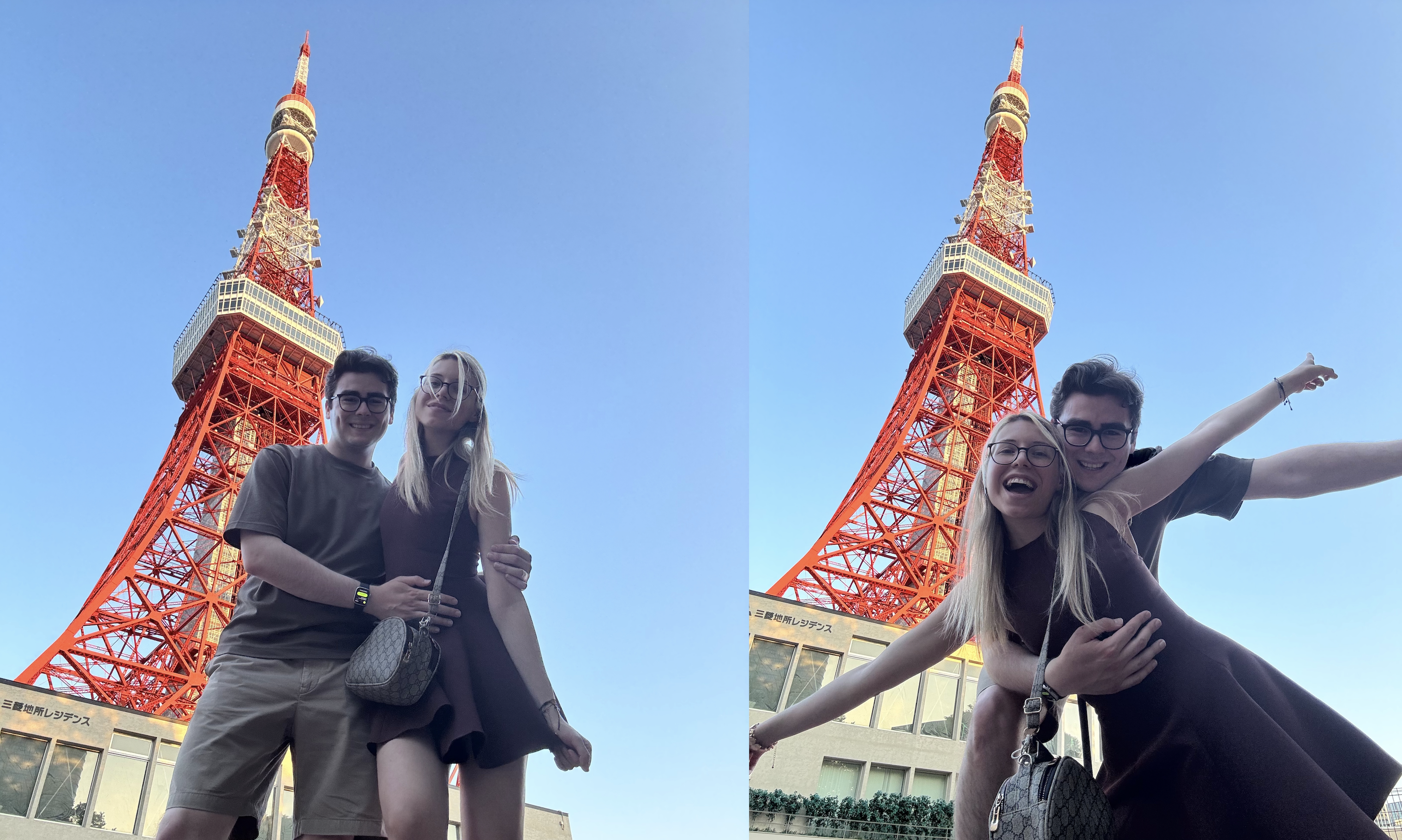
Jet lag then completed what the time difference had started. On 14 May, we woke up late and missed the replacement tickets we had bought for teamLab Borderless: MORI Building Digital Art Museum. We visited Tokyo Tower instead and lost a completely unreasonable amount of time inside Don Quijote, a shop so crowded with objects, sounds and temptations that it feels less like shopping and more like hypnosis.
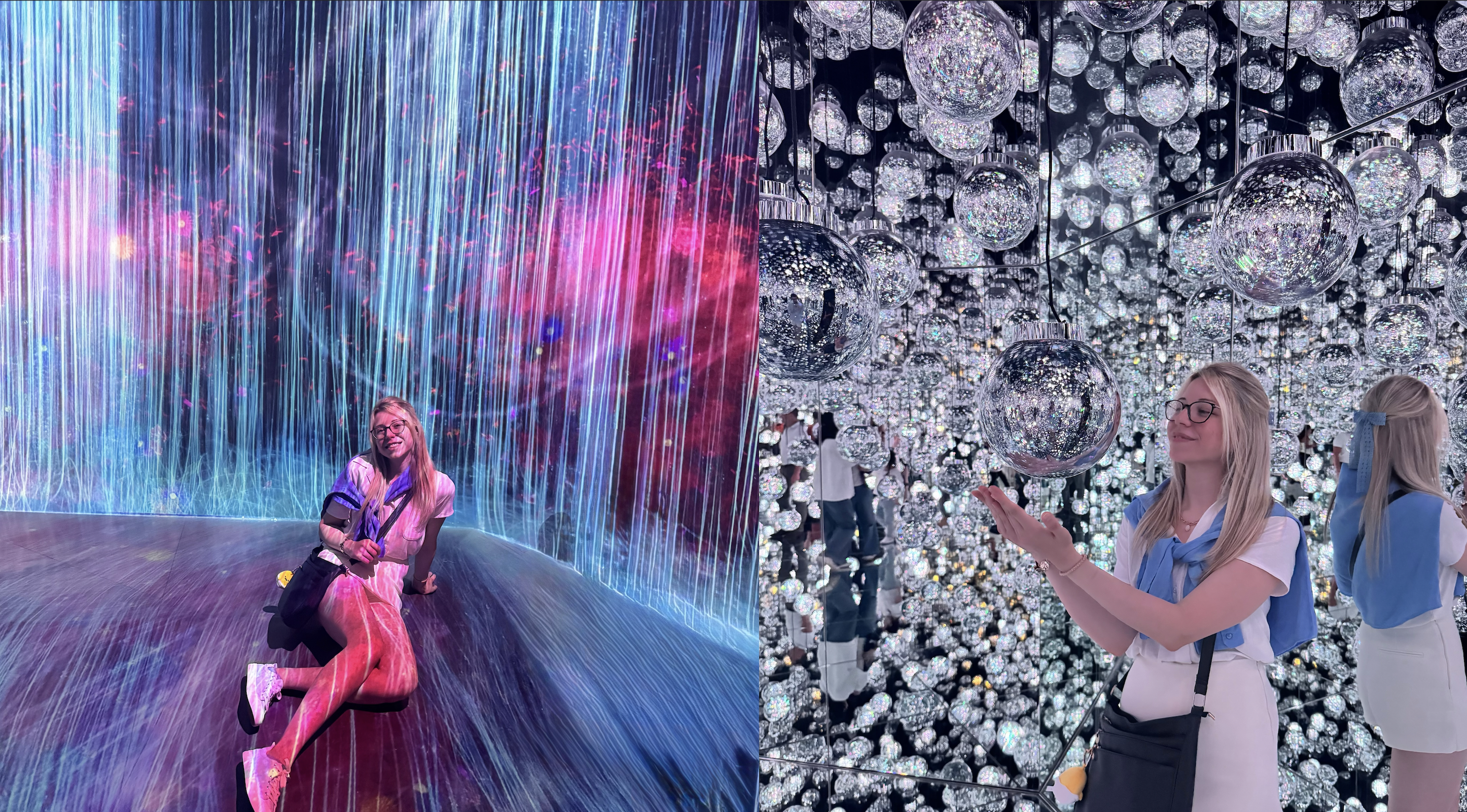
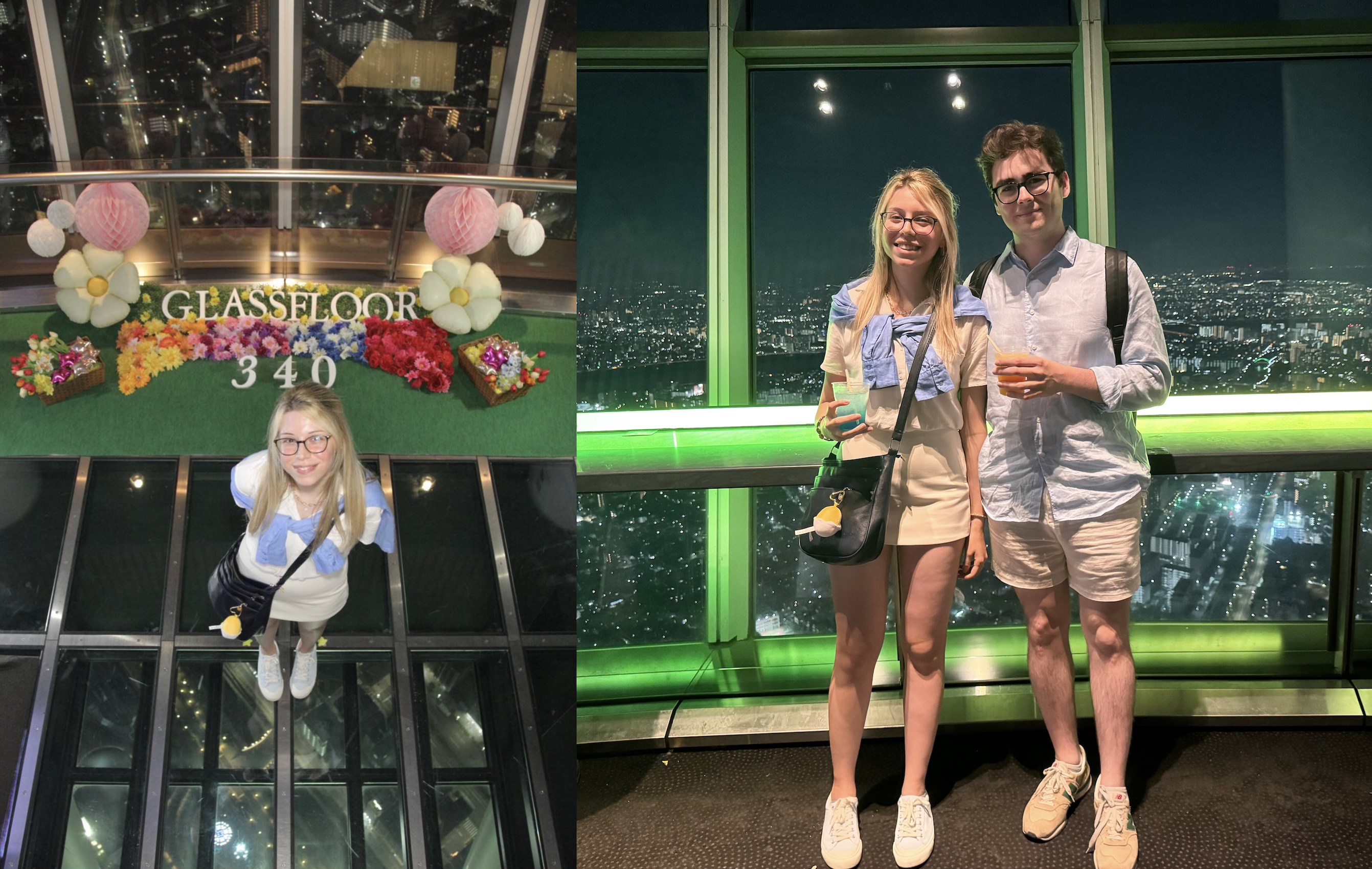
After missing teamLab twice, once because we arrived in Japan a day later than we believed, and once because jet lag defeated us, we bought tickets for a third time. On 15 May, we finally made it inside. Its rooms of light, colour and constantly shifting digital landscapes made the absurd effort worthwhile. We also visited Tokyo Skytree, the broadcasting tower that rises over the city with observation decks high above Tokyo.
By then, we had already established the most important ritual of the trip: breakfast from 7-Eleven. Almost every morning meant tuna-mayo onigiri and a custard-cream-and-chocolate éclair. We were obsessed. Famous attractions changed from day to day; breakfast remained wonderfully predictable.
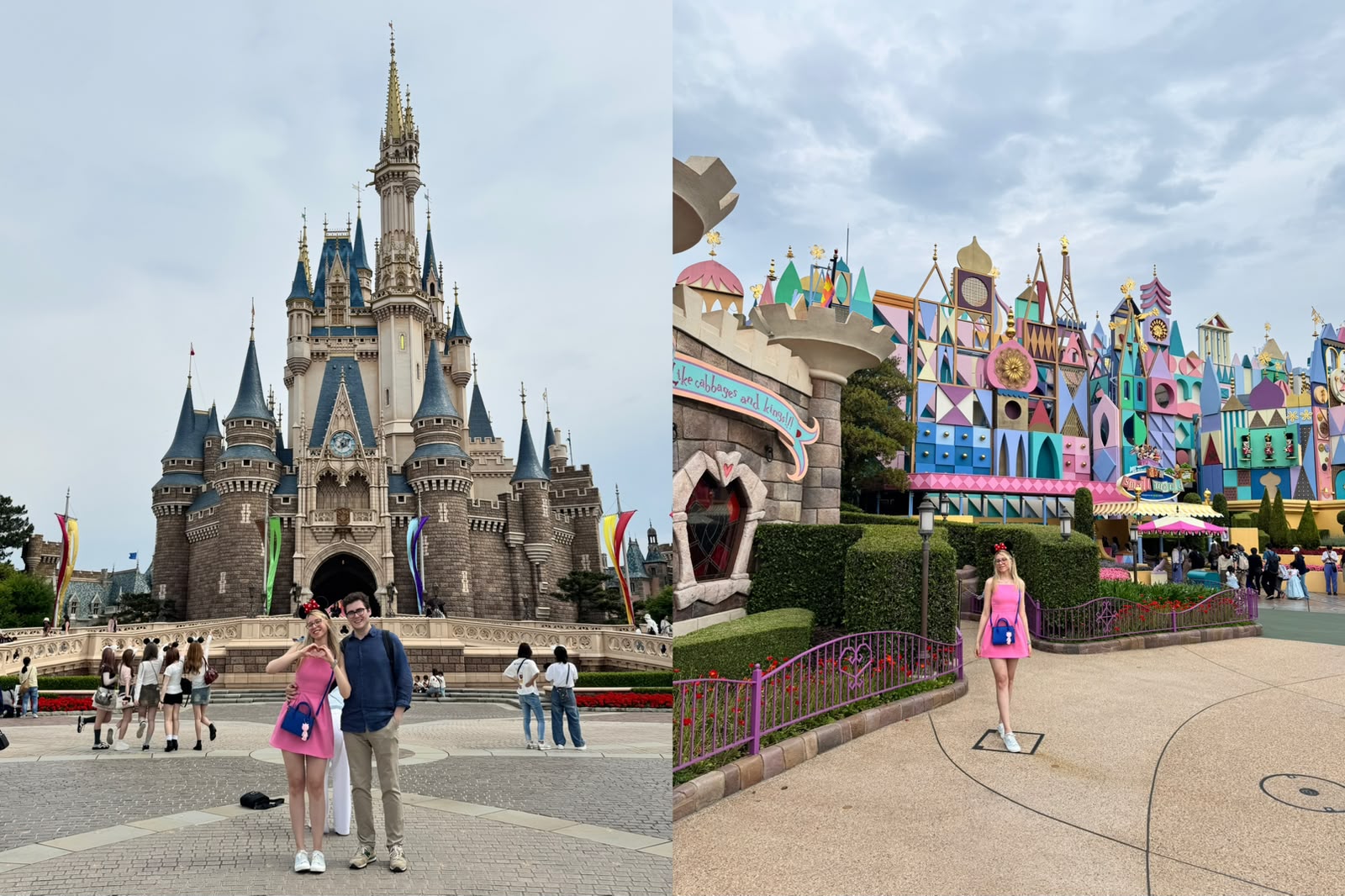
On 16 May, Tokyo Disneyland took almost the entire day. It was joyful, exhausting and exactly the kind of place that encourages adults to surrender dignity without regret. On the way back, we visited Don Quijote again. Apparently, escaping once had not been enough.
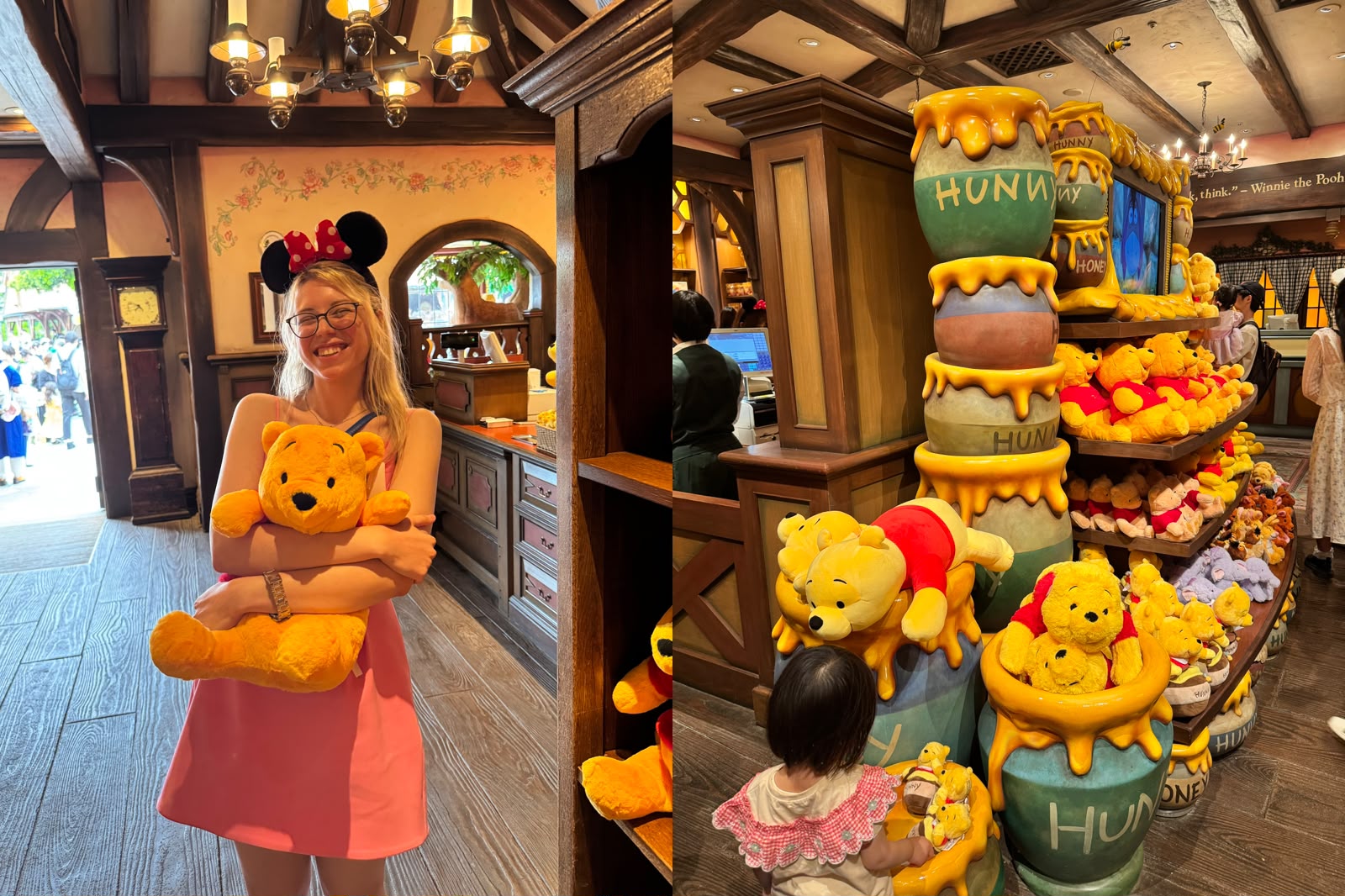
Tokyo deserves a diary of its own, and it will get one. For this first letter, what matters is that our carefully planned beginning had already become something far messier and funnier: sauna-like air, a vanished hotel night, three sets of museum tickets, convenience-store breakfasts and a tower outside our window.
Fuji: terror, quiet and a room with a view
On 17 May, we left Tokyo for the Mount Fuji area and went almost immediately to Fuji-Q Highland. There, my boyfriend used his cuteness to persuade me onto Eejanaika, a 4D roller coaster whose seats rotate independently while the train itself turns through the track. I screamed at the top of my lungs, believed briefly that I might die, and emerged with wild hair and nausea.
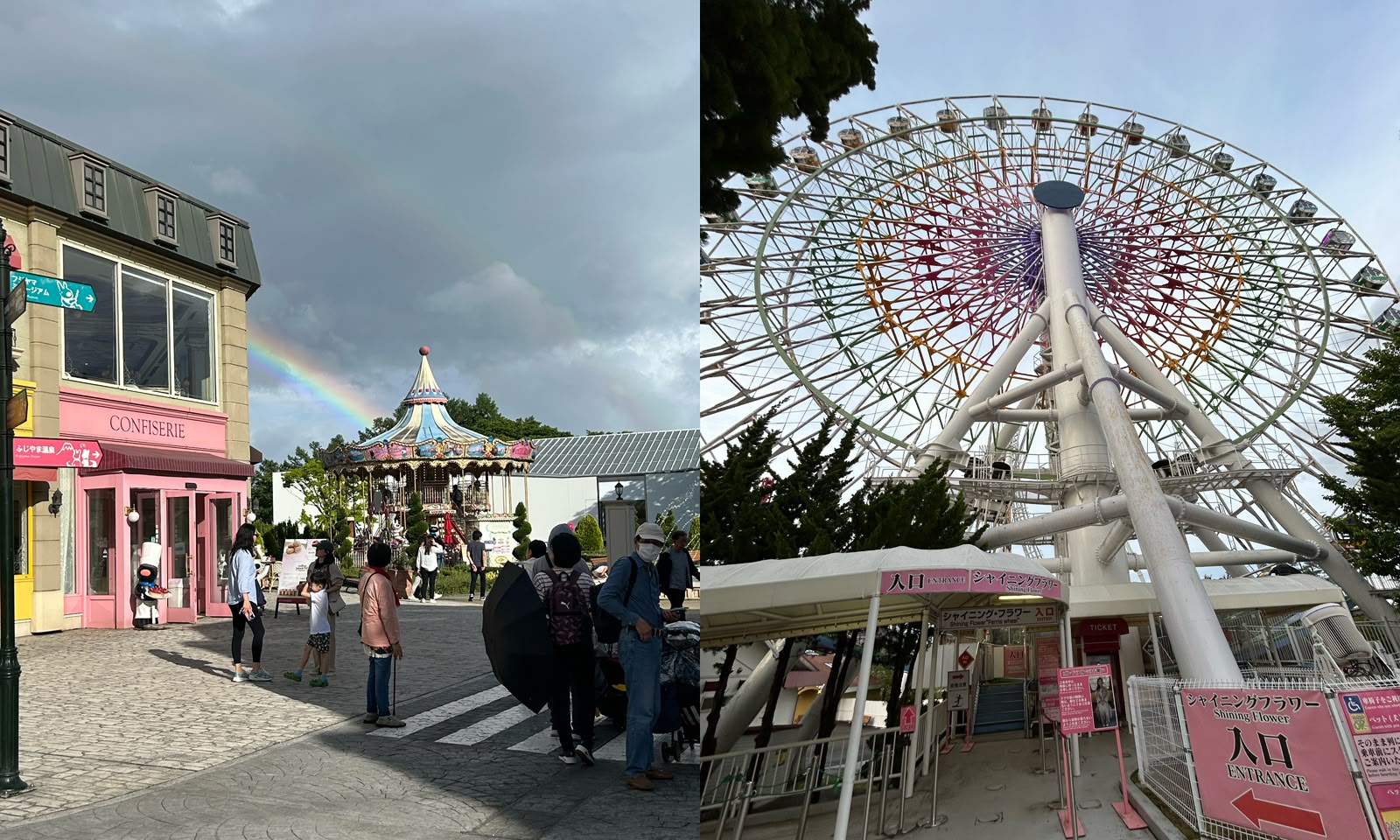
It was worth it. Mostly.
That evening offered the opposite kind of experience. We stayed in a traditional-style room with a direct view of Mount Fuji. After a day of mechanical violence, the mountain looked almost impossibly still.
On 18 May, we collected a travel-guide card from Kawaguchiko Station and used it to shape our route. We visited the Yamanashi Gem Museum, an unavoidable stop for someone who has been mesmerised by gems and stones for as long as she can remember. We also went to Fuji Omuro Sengen Shrine, one of the oldest shrines associated with Mount Fuji, and Saiko Iyashi-no-Sato Nenba, a reconstructed traditional village of thatched-roof houses near Lake Saiko.
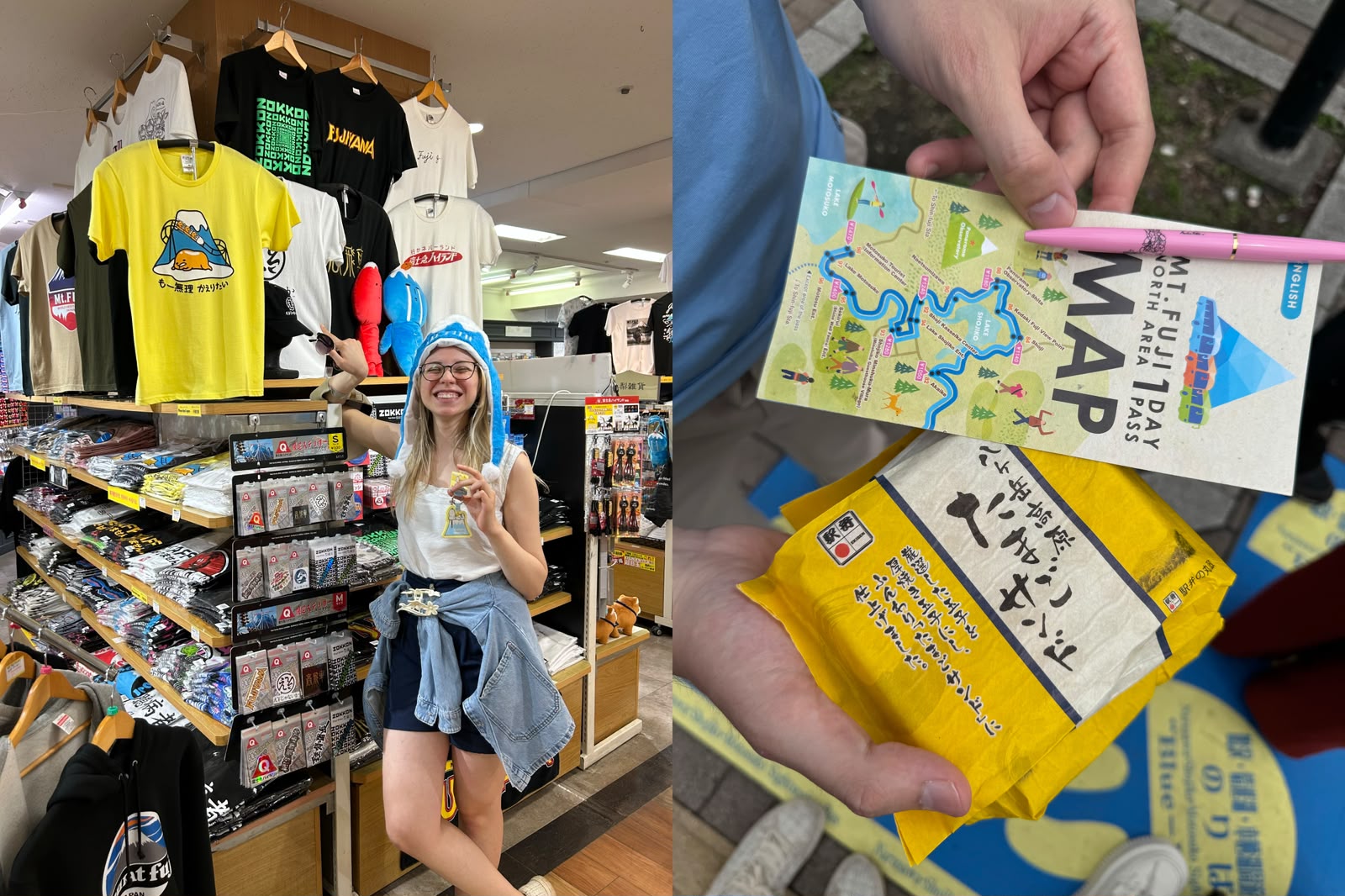
The following day took us to Oishi Park, a lakeside park known for open views across Lake Kawaguchi toward Fuji; the Mount Fuji Panoramic Ropeway, which climbs above the lake; and Tenjoyama Park, where the elevated view made the landscape seem arranged deliberately beneath us.
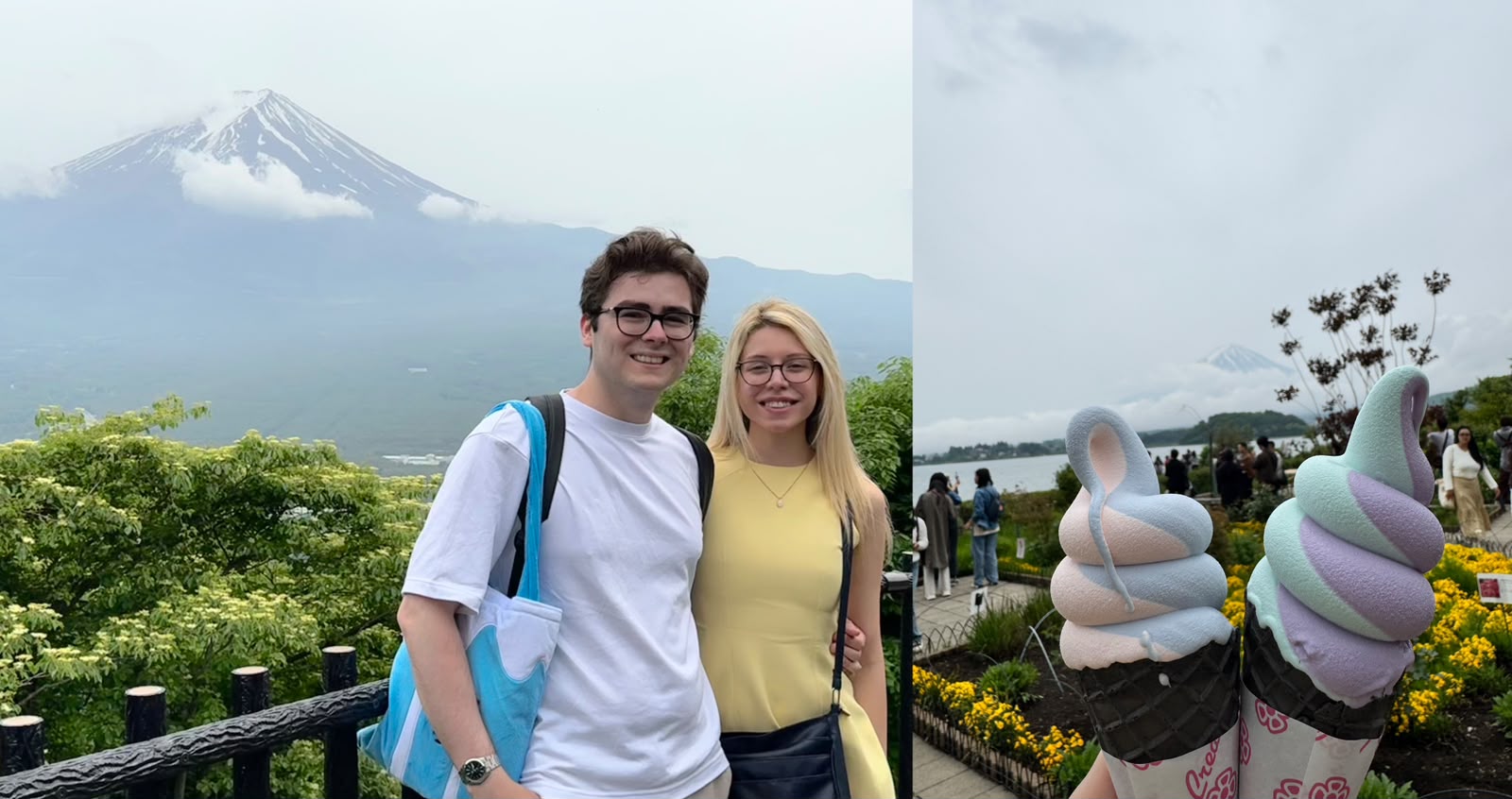
At Oishi Park, Mount Fuji appeared behind the lake and flower gardens almost too perfectly, as if it had been placed there for the photograph. We stopped for pastel soft-serve ice creams and ate them with the mountain still visible beyond us, a small, slightly surreal moment that made the whole landscape feel even more dreamlike.
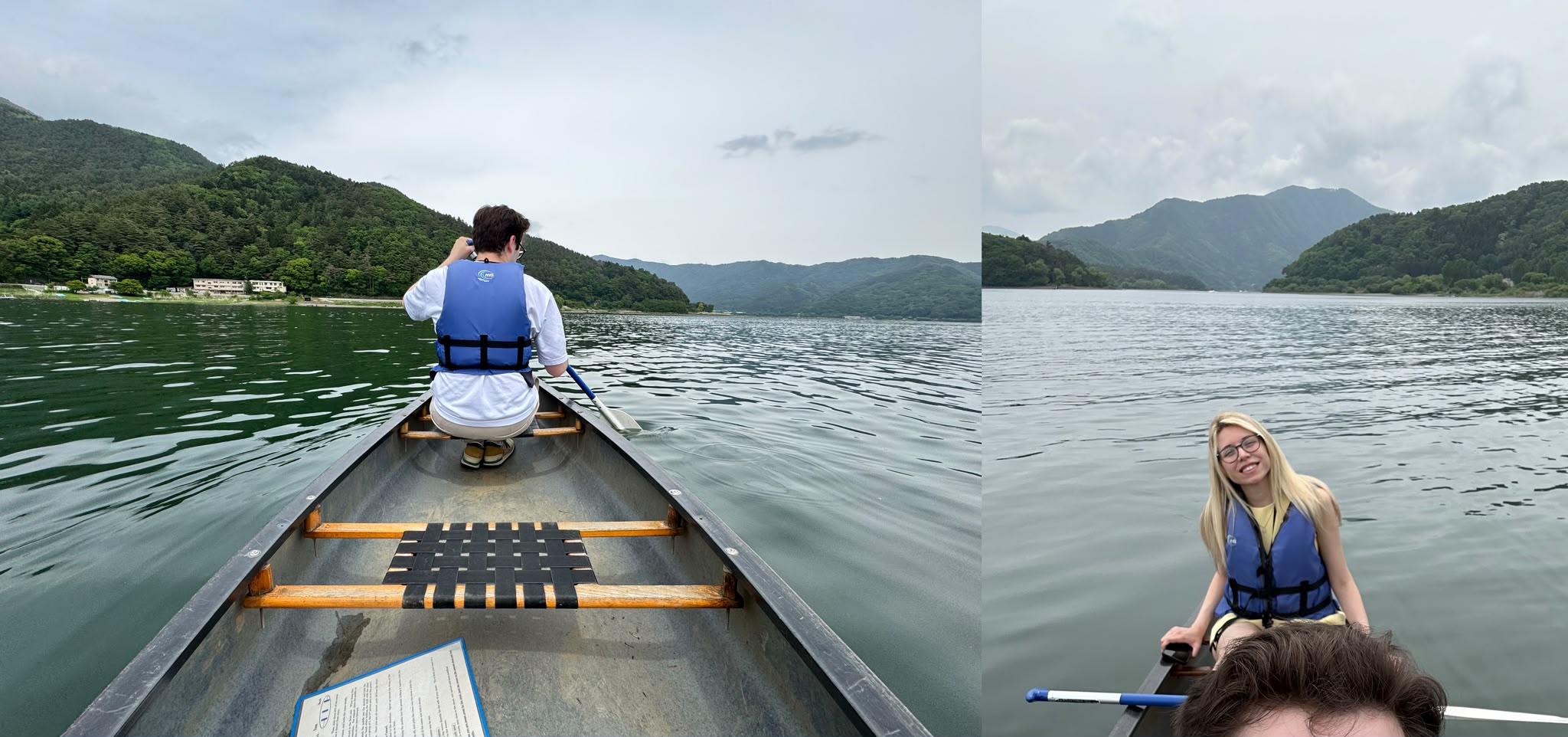
Afterwards, we took a canoe onto the lake. Away from the paths and crowds, the landscape became quieter: still water, forested mountains and the two of us attempting to paddle in something resembling the same direction. Seeing the area from the water gave us a completely different view of it.
That night, we travelled to Nagoya. Our first impression of the city arrived over a late bowl of its famous curry udon at Udon Nishiki.
Nagoya after dark
Nagoya initially felt a little like Tokyo, but something in its nightscape was different. Around Chubu Electric Power MIRAI Tower and the illuminated rooftop of Spaceship-Aqua at Oasis 21, the city became layered, neon-lit and almost cinematic. We had never been to China, although we hope to go one day, so any comparison existed only in our imagined version of an East Asian cyberpunk city. What we could say with certainty was that Nagoya felt futuristic, energetic and chaotic in a way we loved.
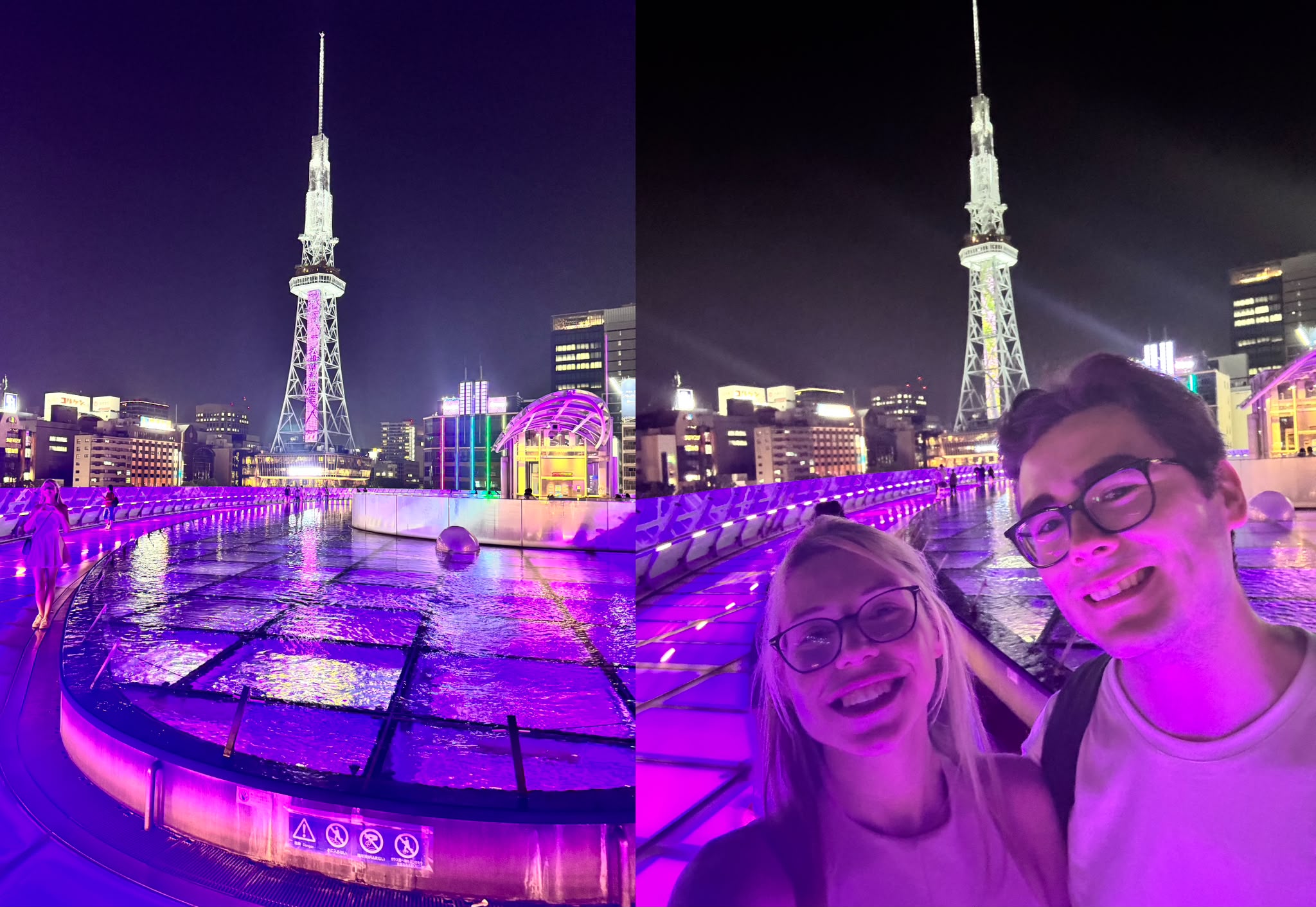
That feeling became strongest at Oasis 21. Its glass rooftop, known as Spaceship-Aqua, glowed purple above the city while Chubu Electric Power MIRAI TOWER rose behind it. With the water, reflections and neon light, the view felt futuristic without losing the strange warmth of the city below. We fell completely in love with Nagoya at night.
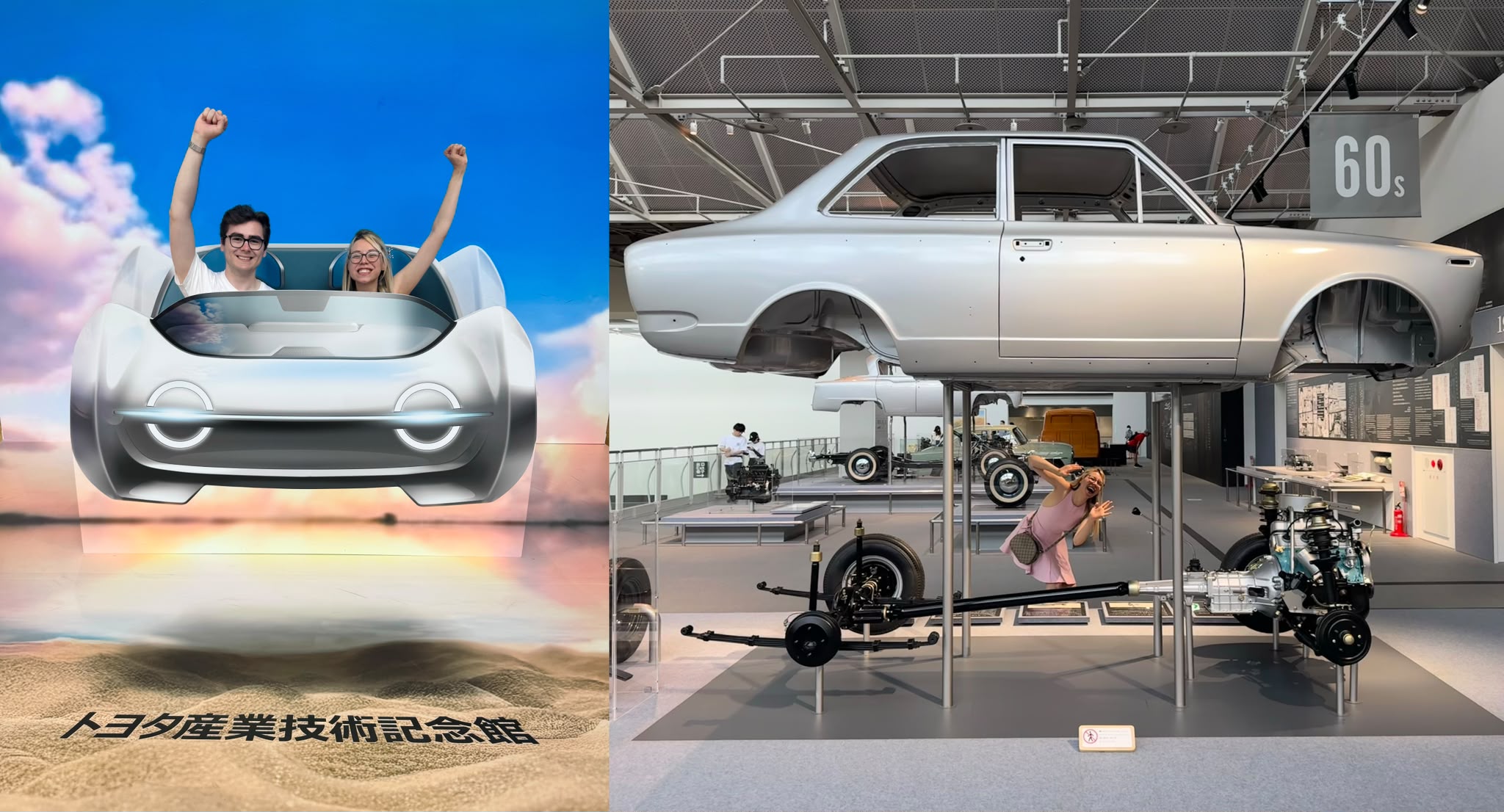
Our favourite visit in Nagoya was the Toyota Commemorative Museum of Industry and Technology. Rather than beginning only with cars, the museum traces the company’s origins through Sakichi Toyoda’s automated textile looms. After selling the rights to one of his loom patents, he gave the money to his son Kiichiro to pursue automobile development. The museum connects these two histories through working machinery, manufacturing demonstrations and cars shown down to their individual mechanical parts. Everything was explained with enough detail to make the technology genuinely exciting, and we had far too much fun with the interactive displays.
Nagoya also introduced us to misokatsu, a local speciality of breaded pork cutlet served with a rich red-miso sauce. We loved it enough to make our own version several times after returning to Amsterdam. Some souvenirs sit on shelves; others quietly become dinner.
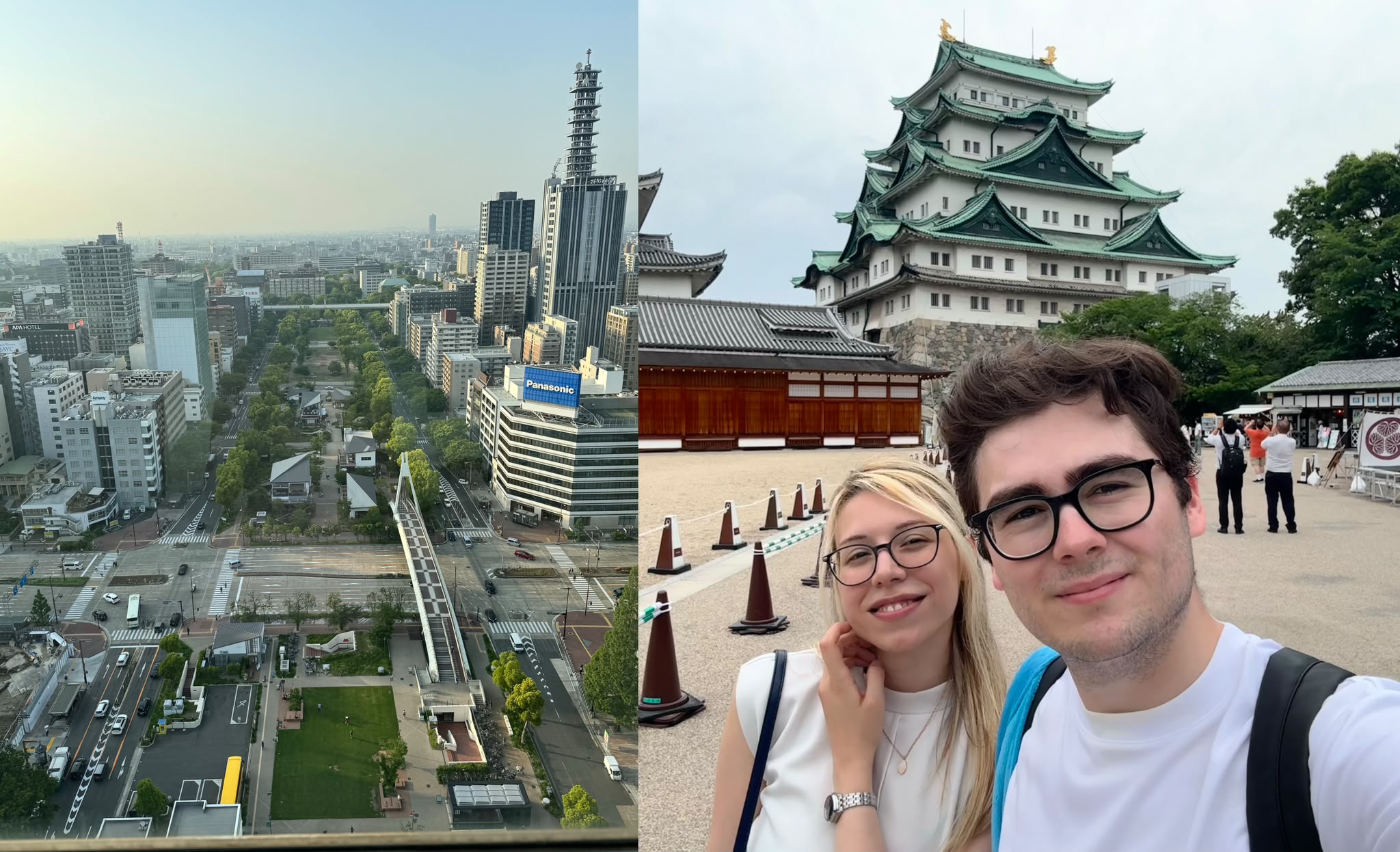
On 21 May, we walked through Hisaya-odori Park, the long urban park running through central Nagoya, and visited Nagoya Castle, famous for its golden shachihoko roof ornaments and its importance to the Tokugawa era. It was gorgeous. We also had photographs taken with one of the samurai performers there.
By night, we were on our way to Osaka.
Osaka, towers and a pancake worth returning for
On 22 May, we visited Osaka Castle, the reconstructed landmark associated with Toyotomi Hideyoshi and Japan's late-sixteenth-century unification. We joined a tea ceremony in Osaka Castle Park, with a fabulous view despite the crowds.
Then, because I seem physically incapable of ignoring a tower, we went to the Umeda Sky Building. Its two towers are connected by the Floating Garden Observatory, and walking high above Osaka with the city illuminated beneath the glass was entirely worth it.
The next day began at A Happy Pancake with one of Japan's famous soufflé pancakes, served with espresso and chocolate sauce, possibly the tiramisu version. It was one of the best things we ate during the entire month. We later travelled back from Kyoto specifically for this pancake, which should explain the seriousness of the situation.
We then left central Osaka for Katsuo-ji and Minoh Falls. Katsuo-ji is associated with success and perseverance, and thousands of red daruma dolls left throughout its grounds make the temple feel like a film set. Minoh Falls, at the end of a wooded walking route, gave the day a quieter rhythm. Together, they became one of the best parts of our Osaka week.
On 24 May came Tsūtenkaku, another tower, why not? The landmark rises above Shinsekai, an older entertainment district whose bright signs and excellent fried food gave the visit a more traditional, local energy than the sleek observation decks we had seen elsewhere. It is a must.
Himeji: a peaceful pause
On 25 May, we took a day trip to Himeji. Himeji Castle, nicknamed the White Heron for its pale, elegant exterior, is one of Japan's best-preserved original castles and was simply too beautiful to skip.
Himeji itself felt clean, peaceful and less densely populated, a welcome pause after Tokyo, Nagoya and Osaka. We also ate another soufflé pancake there. This one was soft and delicate, without a strong flavour, yet still extremely good.
Nara: deer chaos and sudden awe
On 26 May, we travelled to Nara and entered Nara Park, where the deer quickly discovered that I was carrying their crackers. They were adorable until they went completely wild around me. Compared with the calm deer we later met on Miyajima, Nara's seemed spoiled by generations of tourists and fully aware of their power.
We then visited Tōdai-ji, the monumental Buddhist temple whose Great Buddha Hall contains the approximately fifteen-metre bronze Daibutsu, an image of Vairocana Buddha. The hall itself is among the world's largest wooden buildings. I could not stop looking at the Buddha. A ceremony was taking place that day, and the sound and movement made the building feel like a living sacred space rather than a historic object arranged for visitors.
The comedy of the deer and the stillness of the Daibutsu belonged to the same day, which is one of the things I loved about travelling through Japan: the atmosphere could change completely within a short walk.
A slower day, then Kobe
The 27th was deliberately calmer. We ate, wandered and visited Namba Yasaka Jinja, a shrine famous for its enormous lion-head stage, whose open mouth is believed to swallow evil spirits and invite good fortune.
On 28 May, we made a day trip to Kobe with a very clear purpose: wagyu. As two committed meat lovers, we arranged both lunch and a romantic dinner around Kobe beef. Between the meals, we explored Nankinmachi, Kobe's compact Chinatown, filled with restaurants, food stalls and colourful gates.
After dinner, we visited Kobe Port Tower. It was one of the most entertaining towers of the trip because its interior felt almost like a small museum rather than only a route toward a view. By then, the tower collection was no longer accidental.
Hiroshima asks for another kind of attention
On 29 May, we travelled to Hiroshima. We visited Hiroshima Castle, reconstructed after the original was destroyed by the atomic bomb, and Hiroshima Gokoku Shrine, which stands within the castle grounds.
The centre of the day, however, was Hiroshima Peace Memorial Park and the Hiroshima Peace Memorial Museum. Inside the museum, history stopped feeling abstract. Personal belongings, photographs and accounts made the human consequences of the atomic bombing immediate and almost unbearable. I spent much of the visit feeling as though I might cry.
It was not a place to rush through or reduce to a sightseeing stop. It demanded a different kind of attention, and it stayed with me long after we left.
Miyajima, the gentler deer island
On 30 May, a ferry carried us from Hiroshima to Miyajima. We walked around Hatsukaichi Miyajimacho, accompanied by deer who seemed considerably more peaceful than their highly organised relatives in Nara.
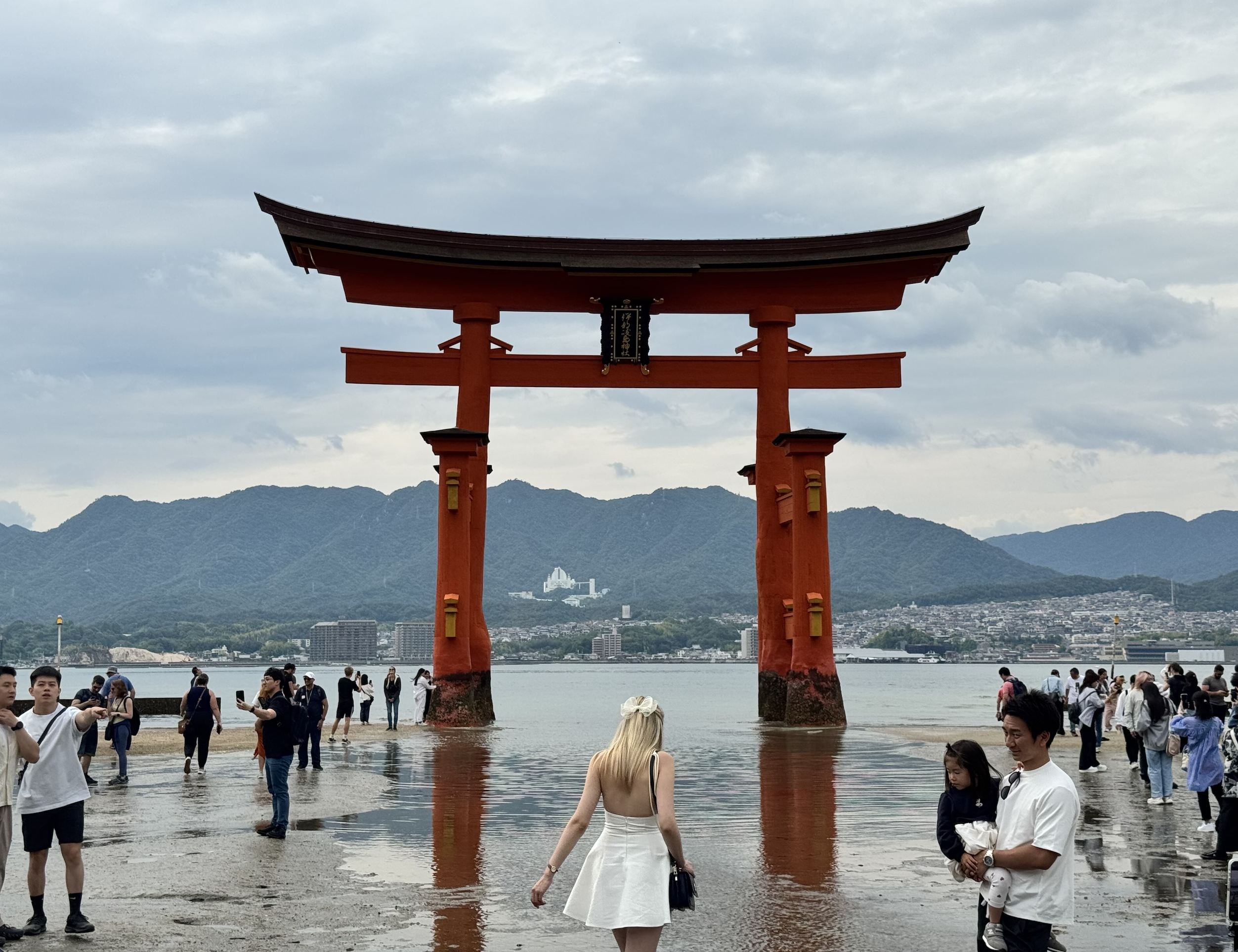
We visited Itsukushima Shrine, the famous Shinto shrine built over the water and known for its seemingly floating vermilion torii gate; Hokoku Shrine and Senjokaku, the vast unfinished wooden hall commissioned by Toyotomi Hideyoshi; Daishoin, an important Buddhist temple on Mount Misen filled with statues, prayer wheels and wooded paths; and Shishiiwa Observatory, where the island and Seto Inland Sea opened beneath us.
After the emotional intensity of Hiroshima, Miyajima gave us water, mountain air and quiet sacred spaces. It felt like room to breathe.
Before leaving Hiroshima on 31 May, we visited Shukkeien Garden. Created in the seventeenth century as a feudal lord's garden, its name refers to landscapes represented in miniature. Fish moved through the ponds beneath small bridges, and the whole place felt like a tiny piece of heaven. Knowing that the garden had been devastated by the atomic bomb and later restored gave its calm another layer of meaning.
Then we travelled to Kyoto.
Kyoto begins from above
We reached Kyoto in the evening, too late to begin exploring properly, but not too late for another tower. From Nidec Kyoto Tower, the modern observation tower opposite Kyoto Station, the old capital appeared all at once beneath us, waiting for morning.
On 1 June, we walked the Philosopher's Path, or Tetsugaku no Michi, a two-kilometre stone route following a canal lined with cherry trees. It takes its name from Kyoto University philosopher Nishida Kitarō, who is said to have used the path for contemplation during his daily walks.
We continued to Ginkaku-ji, the Silver Pavilion, whose beauty lies less in literal silver than in its restrained wooden architecture, sand garden and carefully composed landscape. Later came Okazaki Park, Maruyama Park, Kyoto's oldest public park and a famous cherry-blossom gathering place, and Yasaka Shrine, the important Shinto shrine associated with the centuries-old Gion Festival.
It was a graceful introduction to Kyoto: water, parks and sacred spaces connected mostly by walking.
The day of every temple in Kyoto
On 2 June, Kyoto became an endurance event.
We began with the climb to the Iwatayama Monkey Park summit, where Japanese macaques live above Arashiyama. The heat and humidity made the climb brutal, but the view over Kyoto was, again, worth it.
We visited Tenryū-ji, a major Zen temple known for its historic garden, before entering the Arashiyama Bamboo Grove. The towering bamboo and green filtered light made the path feel like a different universe. Its aesthetics were mesmerising. I left wishing the rest of the world had bamboo forests too.
Then came our temple marathon: Jōjakkō-ji, a hillside temple known for maple trees and views across Kyoto; Nison-in, named for its two principal Buddhist images; Seiryō-ji, also called Saga Shakadō and known for its important image of Shakyamuni Buddha; Giō-ji, a small temple with a moss garden and a melancholy connection to The Tale of the Heike; Adashino Nenbutsu-ji, where thousands of stone figures commemorate the dead; and Daikaku-ji, a former imperial residence later converted into a Buddhist temple.
We finished at Joshin Super Kids Land HQ, a multi-storey hobby shop filled with model kits, miniature cars, trains, figures and collectibles. After a full day of sacred spaces, ending among tiny machines and colourful boxes felt like being dropped abruptly into another universe.
By then, I was pretty much done with temples.
Held hostage by a pancake
On 3 June, A Happy Pancake Kyoto made us wait for hours and consumed the most productive part of our day. My considered recommendation is simple: skip that branch and go to the one in Osaka. We did.
We eventually reached Kyoto Gyoen National Garden and the Kyoto Imperial Palace, the emperor's residence until the capital moved to Tokyo. After some of Kyoto's more elaborate sites, the palace grounds felt less striking but more serene.
We arrived too late to enter Nijō Castle, thanks to the pancakes. The Tokugawa-era castle is famous for its ornate palace rooms and floors that chirp under footsteps, but we saw only the consequences of bad timing from outside.
We continued to Yasui Konpiragū, a shrine where visitors pass through a large stone while asking to end harmful ties and form beneficial ones, and then ate ramen at Ichiran Shijo Higashinotoin. It was good, but after the many kinds of ramen we had already tried, I would not call it extraordinary. The eggs should have been drug eggs for it to become addictive. Sorry.
Ten thousand gates and an evening escape
On 4 June, we visited Fushimi Inari Taisha, famous for the thousands of vermilion torii gates winding up Mount Inari. It was almost impossibly beautiful and almost impossibly crowded.
We then went to Tōfuku-ji, one of Kyoto's principal Zen temples, known for its large complex, historic bridge and gardens of stone and moss, followed by Kiyomizu-dera, the hillside temple whose enormous wooden stage projects above the trees and looks across Kyoto.
That evening, we escaped to Osaka for the Sumo Hall and dinner around Umeda Station, then returned to our favourite hotel stay in Kyoto at night.
On 5 June, we visited Kitano Tenmangū, one of Japan's most important shrines dedicated to Sugawara no Michizane, the scholar-deity associated with learning and academic success. We were also a little sick of Kyoto by then, so we changed the itinerary and went to Osaka again. The food was too difficult to miss. That night, we returned to Kyoto one final time.
Kyoto had given us bamboo, gardens, gates and some of the most beautiful architecture of the trip. It had also taught us that wonder has limits when scheduled too densely. Changing the plan was not a failure; it was proof that the journey had finally become ours.
Kanazawa arrives as a festival
On 6 June, we travelled to Kanazawa on the opening day of the 74th Kanazawa Hyakumangoku Festival, the city's largest annual celebration. The festival commemorates Lord Maeda Toshiie's entry into Kanazawa Castle in 1583 and the growth of the wealthy Kaga Domain.
Our first stop was the Higashi Chaya District, one of Kanazawa's preserved geisha districts, where wooden teahouses line narrow streets once devoted to music, dance and traditional entertainment. There, an instructor guided us through a private matcha tea ceremony and taught us to prepare our own tea. After weeks of stations, crowds and ambitious daily routes, the precise movements asked us to pay attention to a single bowl.
We walked through Higashi Chaya afterward while the city prepared for the festival weekend.
On 7 June, we visited Kanazawa Castle Park, the reconstructed heart of the former Kaga Domain, and watched the festival's main Saturday events in detail. The Hyakumangoku Parade reenacts Maeda Toshiie's arrival with samurai, noblewomen, musicians, dancers and historical performances moving through the city toward the castle. By complete luck, an ordinary sightseeing day had turned into Kanazawa performing its own history around us.
We also visited Oyama Shrine, dedicated to Maeda Toshiie and recognised by its unusual gate combining Japanese, Chinese and European architectural elements.
Later came the Kanazawa Phonograph Museum, which felt as though someone had placed it there specifically for us. Its historic phonographs and records trace how reproduced sound entered people's homes. As an audiophile couple and two people who organise much of life around music, we were obsessed. The old machines told a technological history, but also a domestic one: the story of listening becoming something that could be preserved, collected and shared.
Back where we began
On 8 June, we returned to Tokyo, ate ramen and asked nothing else of the day.
The next morning brought one of our favourite places in the entire itinerary: the Ghibli Museum in Mitaka. Rather than behaving like a conventional museum, it follows the playful logic of Hayao Miyazaki's imagination. Staircases, rooms, drawings and small discoveries made getting lost feel intentional. For a while, it seemed possible that another world existed directly behind every door.
We also returned to Sensō-ji, Tokyo's oldest Buddhist temple, approached through the enormous Kaminarimon gate and the lively Nakamise shopping street.
On 10 June, our final full day, we visited the Tokyo Imperial Palace, the emperor's primary residence on the former grounds of Edo Castle, surrounded by moats, stone walls and gardens. We had new glasses made around Toranomon Hills, carrying home something practical among all the memories.
And then, inevitably, we returned to Tokyo Tower.
We had kept coming back because it was close to our hotel, because we loved Minato, and because there was an ice cream there to which we had become far too attached. Across the month, we had collected views from Tokyo Skytree, MIRAI Tower, Nidec Kyoto Tower, Umeda Sky Building, Tsūtenkaku and Kobe Port Tower. But Tokyo Tower was the one we returned to again and again.
Perhaps it was convenience. Perhaps it was mostly the ice cream. I think it had also become ours.
On 11 June, we flew back to Amsterdam.
The itinerary had looked orderly before we left: cities, hotels, tickets and places arranged into days. The journey itself was not orderly. We arrived a day late, bought museum tickets three times, climbed a mountain for monkeys in summer heat, became victims of deer and pancakes, grew tired of temples, crossed cities for food, and found ourselves inside a festival we had not planned around.
Those were not interruptions to the perfect trip. They were the trip.
What remains now is not one complete image of Japan, but hundreds of details: roof tiles from the Narita train, Mount Fuji outside a traditional room, red daruma covering a hillside, the still face of the Daibutsu, fish beneath the bridges of Shukkeien, matcha whisked by our own hands, an old phonograph beginning to sing, and Tokyo Tower appearing outside the hotel window.
We left with more places still to understand than we had when we arrived. That may be the best thing a month of travel can give you: not the feeling that you have finished a country, but the certainty that you have only begun looking.
Until next time,
Suhe